David Oyelowo
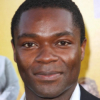
David Oyelowo
David Oyetokunbo Oyelowo, OBE is a African actor and producer. He has played supporting roles in the films Rise of the Planet of the Apes, Middle of Nowhere, Lincoln, and garnered praise for portraying Louis Gaines in The Butler. On television, he played MI5 officer Danny Hunter in the British series Spooks, and as of 2014, provides the voice of Imperial Security Bureau Agent Kallus on the animated series Star Wars Rebels. In 2014, Oyelowo played Martin Luther King, Jr...
NationalityEnglish
ProfessionTV Actor
Date of Birth1 April 1976
CityOxford, England
As you know, Sunday at 11 o'clock is the most segregated hour in America. You have black churches; you have white churches; you have Hispanic churches. It's not really reflective of the world we live in, by and large, in America.
One of the things I have an allergic reaction to playing, especially as a black actor, is the mandatory kind of best friend/cop/detective type. You will never see me in that movie.
Don't send me your script if you want me to play the black best friend. I just won't do that.
I love that as a black person I've experienced not being a minority. I think that's helped me to combat the minority mentality people can have here, which can stop them scaling the heights.
I have a bee in my bonnet as to how few black historical figures one sees on film; incredible stories, stories from which we are living the legacy and which just don't get made.
I think until Britain acknowledges just how much of a presence black people had here before the Sixties, then there are certain stories that are not going to be inclusive of what I have to offer.
I think that having a black president in this country has been a seismic shift, in terms of what has been going on racially in America. I think that America is now engaging with how we have come to this point.
In my time since moving to the United States, I've found that there is a dearth of great writing for black people. There are stories that depict us in a way that isn't cliched or niche, and that a white person, a Chinese person, an Indian person can watch and relate to. Those are the stories I want to be a part of telling.
I do think opportunity breeds bravery. It's such a competitive profession, no one owes you anything, talent in itself is not enough. I went to drama school with so many great actors who are not doing it anymore and it's circumstantial.
I know for a fact the reason I'm an actor is because one, two, maybe three people when I was younger saw something that I did, in youth theater or some small play somewhere, and said, "You're good."
One of the occupational hazards of being an actor, the reason why so many actors are insecure, is that the only way we know we're good is when other people tell us.
I think what a lot of people don't realize is how much being the leader of this movement weighed upon him. After all, he [Dr. Martin Luter King] was only 39 years-old when he was assassinated, and only 36 during the Selma campaign. He always seemed older than he actually was, and I believe part of that had to do with just how much life he had to live in order to lead this movement.
I'm one of those actors who says, "Point me toward the work that matters to me and I don't care where you're putting it. Television show. Movie. Projected on the back of someone's garage." If that's where the work is that's exciting to me and moving, I want to be there.
I feel television is in a fantastically rich vein of what it's presenting both by opportunity to actors and to audiences.