Blaise Pascal
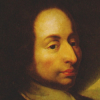
Blaise Pascal
Blaise Pascalwas a French mathematician, physicist, inventor, writer and Christian philosopher. He was a child prodigy who was educated by his father, a tax collector in Rouen. Pascal's earliest work was in the natural and applied sciences where he made important contributions to the study of fluids, and clarified the concepts of pressure and vacuum by generalising the work of Evangelista Torricelli. Pascal also wrote in defence of the scientific method...
NationalityFrench
ProfessionPhilosopher
Date of Birth19 June 1623
CityClermont-Ferrand, France
CountryFrance
We feel neither extreme heat nor extreme cold; qualities that are in excess are so much at variance with our feelings that they are impalpable: we do not feel them, though we suffer from their effects.
Great and small suffer the same mishaps.
Mankind suffers from two excesses: to exclude reason, and to live by nothing but reason.
This religion taught to her children what men have only been able to discover by their greatest knowledge.
What is man in nature? Nothing in relation to the infinite, all in relation to nothing, a mean between nothing and everything
Two kinds of persons know Him: those who have a humble heart, and who love lowliness, whatever kind of intellect they may have, high or low; and those who have sufficient understanding to see the truth, whatever opposition they may have to it.
Faith certainly tells us what the senses do not, but not the contrary of what they see; it is above, not against them.
It is the fight alone that pleases us, not the victory.
If all men knew what others say of them, there would not be four friends in the world.
We know the truth, not only by the reason, but also by the heart.
I have discovered that all human evil comes from this, man's being unable to sit still in a room.
People are usually more convinced by reasons they discovered themselves than by those found by others.
Between us and heaven or hell there is only life, which is the frailest thing in the world.
Two extremes: to exclude reason, to admit reason only.