Blaise Pascal
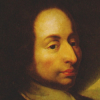
Blaise Pascal
Blaise Pascalwas a French mathematician, physicist, inventor, writer and Christian philosopher. He was a child prodigy who was educated by his father, a tax collector in Rouen. Pascal's earliest work was in the natural and applied sciences where he made important contributions to the study of fluids, and clarified the concepts of pressure and vacuum by generalising the work of Evangelista Torricelli. Pascal also wrote in defence of the scientific method...
NationalityFrench
ProfessionPhilosopher
Date of Birth19 June 1623
CityClermont-Ferrand, France
CountryFrance
By a peculiar prerogative, not only each individual is making daily advances in the sciences, and may make advances in morality (which is the science, by way of eminence, of living well and being happy), but all mankind together is making a continual progress in proportion as the universe grows older. So that the whole human race, during the course of so many ages, may be considered as one man who never ceases to live and learn.
The mind naturally makes progress, and the will naturally clings to objects; so that for want of right objects, it will attach itself to wrong ones.
The sensibility of man to trifles, and his insensibility to great things, indicates a strange inversion.
Sleep, you say, is the image of death; for my part I say that it is rather the image of life.
Two extremes: to exclude reason, to admit reason only.
What is man in nature? Nothing in relation to the infinite, all in relation to nothing, a mean between nothing and everything
And which of you with taking thought can add to his stature one cubit?
The most powerful cause of error is the war existing between the senses and reason
Nature diversifies and imitates; art imitates and diversifies.
Man is but a reed, the weakest in nature; but he is a thinking reed.
Man is but a reed, the most weak in nature, but he is a thinking reed
Mahomet established a religion by putting his enemies to death; Jesus Christ by commanding his followers to lay down their lives
Love has its reasons that Reason knows not
Le coeur a ses raisons dont le cerveau ne sait nul. T: 'The heart has its reasons, of which the mind knows nothing.'