Blaise Pascal
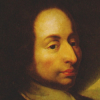
Blaise Pascal
Blaise Pascalwas a French mathematician, physicist, inventor, writer and Christian philosopher. He was a child prodigy who was educated by his father, a tax collector in Rouen. Pascal's earliest work was in the natural and applied sciences where he made important contributions to the study of fluids, and clarified the concepts of pressure and vacuum by generalising the work of Evangelista Torricelli. Pascal also wrote in defence of the scientific method...
NationalityFrench
ProfessionPhilosopher
Date of Birth19 June 1623
CityClermont-Ferrand, France
CountryFrance
Dull minds are never either intuitive or mathematical.
Contradiction is not a sign of falsity, nor the lack of contradiction a sign of truth.
Everything that is written merely to please the author is worthless.
The best defense against logic is ignorance.
Perfect clarity would profit the intellect but damage the will.
When intuition and logic agree, you are always right.
Few men speak humbly of humility, chastely of chastity, skeptically of skepticism.
Nature is an infinite sphere of which the center is everywhere and the circumference nowhere.
It is not certain that everything is uncertain.
The supreme function of reason is to show man that some things are beyond reason.
Small minds are concerned with the extraordinary, great minds with the ordinary.
This religion taught to her children what men have only been able to discover by their greatest knowledge.
What is man in nature? Nothing in relation to the infinite, all in relation to nothing, a mean between nothing and everything
Two kinds of persons know Him: those who have a humble heart, and who love lowliness, whatever kind of intellect they may have, high or low; and those who have sufficient understanding to see the truth, whatever opposition they may have to it.