Blaise Pascal
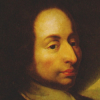
Blaise Pascal
Blaise Pascalwas a French mathematician, physicist, inventor, writer and Christian philosopher. He was a child prodigy who was educated by his father, a tax collector in Rouen. Pascal's earliest work was in the natural and applied sciences where he made important contributions to the study of fluids, and clarified the concepts of pressure and vacuum by generalising the work of Evangelista Torricelli. Pascal also wrote in defence of the scientific method...
NationalityFrench
ProfessionPhilosopher
Date of Birth19 June 1623
CityClermont-Ferrand, France
CountryFrance
The last proceeding of reason is to recognize that there is an infinity of things which are beyond it. There is nothing so conformable to reason as this disavowal of reason.
The last thing that we find in making a book is to know what we must put first.
Reason's last step is to acknowledge that there are infinitely many things beyond it.
La dernie' re chose qu'on trouve en faisant un ouvrage, est de savoir celle qu'il faut mettre la premie' re. The last thing one discovers in composing a work iswhat to put first.
The last advance of reason is to recognize that it is surpassed by innumerable things; it is feeble if it cannot realize that.
The last function of reason is to recognize that there are an infinity of things which surpass it.
The sensibility of man to trifles, and his insensibility to great things, indicates a strange inversion.
Sleep, you say, is the image of death; for my part I say that it is rather the image of life.
Two extremes: to exclude reason, to admit reason only.
What is man in nature? Nothing in relation to the infinite, all in relation to nothing, a mean between nothing and everything
And which of you with taking thought can add to his stature one cubit?
The most powerful cause of error is the war existing between the senses and reason
Nature diversifies and imitates; art imitates and diversifies.
Man is but a reed, the weakest in nature; but he is a thinking reed.