Blaise Pascal
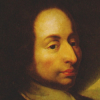
Blaise Pascal
Blaise Pascalwas a French mathematician, physicist, inventor, writer and Christian philosopher. He was a child prodigy who was educated by his father, a tax collector in Rouen. Pascal's earliest work was in the natural and applied sciences where he made important contributions to the study of fluids, and clarified the concepts of pressure and vacuum by generalising the work of Evangelista Torricelli. Pascal also wrote in defence of the scientific method...
NationalityFrench
ProfessionPhilosopher
Date of Birth19 June 1623
CityClermont-Ferrand, France
CountryFrance
If they [Plato and Aristotle] wrote about politics it was as if to lay down rules for a madhouse. And if they pretended to treat it as something really important it was because they knew that the madmen they were talking to believed themselves to be kings and emperors. They humored these beliefs in order to calm down their madness with as little harm as possible.
If we dreamed the same thing every night, it would affect us much as the objects we see every day. And if a common workman were sure to dream every night for twelve hours that he was a king, I believe he would be almost as happy as a king who should dream every night for twelve hours on end that he was a common workman.
In order to enter into a real knowledge of your condition, consider it in this image: A man was cast by a tempest upon an unknown island, the inhabitants of which were in trouble to find their king, who was lost; and having a strong resemblance both in form and face to this king, he was taken for him, and acknowledged in this capacity by all the people.
No one is discontented at not being a king except a discrowned king ... unhappiness almost invariably indicates the existence of a road not taken, a talent undeveloped, a self not recognized.
You are in the same manner surrounded with a small circle of persons... full of desire. They demand of you the benefits of desire... You are therefore properly the king of desire. ...equal in this to the greatest kings of the earth... It is desire that constitutes their power; that is, the possession of things that men covet.
E? loquence quipersuade par douceur, non par empire, en tyran, non en roi. Eloquence should persuade gently, not by force or like a tyrant or king.
To call a king "Prince" is pleasing, because it diminishes his rank.
This religion taught to her children what men have only been able to discover by their greatest knowledge.
What is man in nature? Nothing in relation to the infinite, all in relation to nothing, a mean between nothing and everything
Two kinds of persons know Him: those who have a humble heart, and who love lowliness, whatever kind of intellect they may have, high or low; and those who have sufficient understanding to see the truth, whatever opposition they may have to it.
Faith certainly tells us what the senses do not, but not the contrary of what they see; it is above, not against them.
It is the fight alone that pleases us, not the victory.
If all men knew what others say of them, there would not be four friends in the world.
We know the truth, not only by the reason, but also by the heart.