Benjamin Franklin
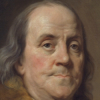
Benjamin Franklin
Benjamin Franklinwas one of the Founding Fathers of the United States. A renowned polymath, Franklin was a leading author, printer, political theorist, politician, freemason, postmaster, scientist, inventor, civic activist, statesman, and diplomat. As a scientist, he was a major figure in the American Enlightenment and the history of physics for his discoveries and theories regarding electricity. As an inventor, he is known for the lightning rod, bifocals, and the Franklin stove, among other inventions. He facilitated many civic organizations, including...
NationalityAmerican
ProfessionScientist
Date of Birth17 January 1706
CityBoston, MA
CountryUnited States of America
The ordaining of laws in favor of one part of the nation, to the prejudice and oppression of another, is certainly the most erroneous and mistaken policy. An equal dispensation of protection, rights, privileges, and advantages, is what every part is entitled to, and ought to enjoy.
The US Constitution only guarantees your rights as a citizen, it doesn't guarantee happiness. It may take work, but if you have your rights, happiness is very possible.
an enormous proportion of property vested in a few individuals is dangerous to the rights, and destructive of the common happiness of mankind, and, therefore, every free state hath a right by its laws to discourage the possession of such property.
But they have two other Rights; those of sitting when they please, and as long as they please, in which methinks they have the advantage of your Parliament; for they cannot be dissolved by the Breath of a Minister, or sent packing as you were the other day, when it was your earnest desire to have remained longer together.
It is very imprudent to deprive America of any of her privileges. If her commerce and friendship are of any importance to you, they are to be had on no other terms than leaving her in the full enjoyment of her rights.
That it is better that 100 guilty persons should escape than that one innocent person should suffer, is a maxim that has been long and generally approved.
The nearest way to come at glory, is to do that for conscience which we do for glory.
Again, He that sells upon Credit, asks a Price for what he sells, equivalent to the Principal and Interest of his Money for the Time he is like to be kept out of it: therefore
The favor of the Great is no inheritance.
If man could have half his wishes he would double his troubles
I never saw an oft-transplanted tree, Nor yet an oft-removed family, That throve so well as those that settled be
In each religion there are essential things, and others which are only forms and fashions; as a loaf of sugar may perhaps be wrapped in brown or white or blue paper, and tied with a string of flax or wool, red or yellow; but the sugar is always the e
Ill Customs & bad Advice are seldom forgotten.
Never spare the Parson's wine, nor Baker's Pudding.