Ben Bernanke
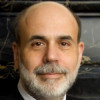
Ben Bernanke
Ben Shalom Bernankeis an American economist at the Brookings Institution who served two terms as chairman of the Federal Reserve, the central bank of the United States, from 2006 to 2014. During his tenure as chairman, Bernanke oversaw the Federal Reserve's response to the late-2000s financial crisis. Before becoming Federal Reserve chairman, Bernanke was a tenured professor at Princeton University and chaired the department of economics there from 1996 to September 2002, when he went on public service leave...
NationalityAmerican
ProfessionPolitician
Date of Birth13 December 1953
CityAugusta, GA
CountryUnited States of America
A very important factor is the fact that inflation expectations are well-controlled and well-contained, which means that the Federal Reserve, unlike the 70s, doesn't have to react violently in terms of raising interest rates to contain the second- and third-round inflationary impacts. So I remain pretty optimistic about the economy,
Monetary policy has less room to maneuver when interest rates are close to zero, while expansionary fiscal policy is likely both more effective and less costly in terms of increased debt burden when interest rates are pinned at low levels.
The Federal Reserve can only buy Treasuries and agencies, and moreover quantitative easing typically involves buying longer-term Treasuries and agencies in terms of bills, for example.
Growth in U.S. real imports slowed to about 3 percent in 2006, in part reflecting a drop in real terms in imports of crude oil and petroleum products.
Long term, I have a lot of confidence in the United States. We have an excellent record in terms of innovation. We have great universities that are involved in technological change and progress. We have an entrepreneurial culture, much more than almost any other country.
Inflation is up, driven by energy prices. Underlying core rates remain low, which is encouraging.
Inflation is not even a remote risk in the U.S.. Because inflation is so low, monetary policy can afford to be patient to be sure that the recovery is sustained.
Indeed, I would argue that, in situations of considerable slack, growth that is generated solely by increased productivity, and that is unaccompanied by substantial employment growth, may possibly require monetary ease, rather than monetary tightening, in the short run.
Income inequality is troubling because, among other things, it means that many people in our society don't have the opportunities to advance themselves.
In all likelihood, a significant amount of time will be required to restore the nearly eight and a half million jobs that were lost nationwide over 2008 and 2009.
Economic science concerns itself primarily with theoretical and empirical generalizations about the behavior of individuals, institutions, markets, and national economies. Most academic research falls in this category.
Economic management involves the operation of economic frameworks in real time - for example, in the private sector, the management of complex financial institutions or, in the public sector, the day-to-day supervision of those institutions.
The biggest downside of my current job is that I have to wear a suit to work. Wearing uncomfortable clothes on purpose is an example of what former Princeton hockey player and Nobel Prize winner Michael Spence taught economists to call 'signaling.'
Stronger regulation and supervision aimed at problems with underwriting practices and lenders' risk management would have been a more effective and surgical approach to constraining the housing bubble than a general increase in interest rates.