Arthur Schopenhauer
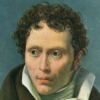
Arthur Schopenhauer
Arthur Schopenhauerwas a German philosopher. He is best known for his 1818 work The World as Will and Representation, in which he characterizes the phenomenal world as the product of a blind, insatiable, and malignant metaphysical will. Proceeding from the transcendental idealism of Immanuel Kant, Schopenhauer developed an atheistic metaphysical and ethical system that has been described as an exemplary manifestation of philosophical pessimism, rejecting the contemporaneous post-Kantian philosophies of German idealism. Schopenhauer was among the first thinkers in Western...
NationalityGerman
ProfessionPhilosopher
Date of Birth22 February 1788
CountryGermany
The little honesty that exists among authors is discernible in the unconscionable way they misquote from the writings of others.
The auspices for philosophy are bad if, when proceeding ostensibly on the investigation of truth, we start saying farewell to all uprightness, honesty and sincerity, and are intent only on passing ourselves off for what we are not. We then assume, like those three sophists [Fichte, Schelling and Hegel], first a false pathos, then an affected and lofty earnestness, then an air of infinite superiority, in order to impose where we despair of ever being able to convince.
With people of limited ability modesty is merely honesty. But with those who possess great talent it is hypocrisy.
Truth that is naked is the most beautiful, and the simpler its expression the deeper is the impression it makes; this is partly because it gets unobstructed hold of the hearer’s mind without his being distracted by secondary thoughts, and partly because he feels that here he is not being corrupted or deceived by the arts of rhetoric, but that the whole effect is got from the thing itself.
Nothing is to be had for gold but mediocrity
Every truth passes through three stages before it is recognized In the first it is ridiculed, in the second it is opposed, in the third it is regarded as self-evident
Every truth passes through three stages before it is recognized. In the first it is ridiculed, in the second it is opposed, in the third it is regarded as self evident.
The middle ages showed us the results of thinking without experimentation, our present centuryshows us what experimentation without thinking leads to.
The two foes of human happiness are pain and boredom
There is something in us wiser than our head
First it is ridiculed,Second it is violently opposed,-finally it is accepted as self evident
To marry is to halve your rights and double your duties.
Everyone takes the limits of his own vision for the limits of the world.
Every parting gives a foretaste of death; every coming together again a foretaste of the resurrection