Aristotle
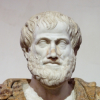
Aristotle
Aristotle was a Greek philosopher and scientist born in the city of Stagira, Chalkidice, on the northern periphery of Classical Greece. His father, Nicomachus, died when Aristotle was a child, whereafter Proxenus of Atarneus became his guardian. At eighteen, he joined Plato's Academy in Athens and remained there until the age of thirty-seven. His writings cover many subjects – including physics, biology, zoology, metaphysics, logic, ethics, aesthetics, poetry, theater, music, rhetoric, linguistics, politics and government – and constitute the first comprehensive system...
NationalityGreek
ProfessionPhilosopher
They - Young People have exalted notions, because they have not been humbled by life or learned its necessary limitations; moreover, their hopeful disposition makes them think themselves equal to great things - and that means having exalted notions. They would always rather do noble deeds than useful ones: Their lives are regulated more by moral feeling than by reasoning - all their mistakes are in the direction of doing things excessively and vehemently. They overdo everything - they love too much, hate too much, and the same with everything else.
Thus it is thought that justice is equality; and so it is, but not for all persons, only for those that are equal. Inequality also is thought to be just; and so it is, but not for all, only for the unequal. We make bad mistakes if we neglect this for whom when we are deciding what is just. The reason is that we are making judgements about ourselves, and people are generally bad judges where their own interests are involved.
The best friend is the man who in wishing me well wishes it for my sake.
It is the nature of desire not to be satisfied, and most men live only for the gratification of it.
Every action must be due to one or other of seven causes: chance, nature, compulsion, habit, reasoning, anger, or appetite.
Tragedy is thus a representation of an action that is worth serious attention, complete in itself and of some amplitude... by means of pity and fear bringing about the purgation of such emotions.
A true friend is one soul in two bodies.
A tragedy is the imitation of an action that is serious, and also, as having magnitude, complete in itself . . . with incidents arousing pity and terror, with which to accomplish its purgation of these emotions.
Dignity consists not in possessing honors, but in the consciousness that we deserve them.
We should behave to our friends as we would wish our friends to behave to us
The search for truth is in one way hard and in another way easy, for it is evident that no one can master it fully or miss it wholly. But each adds a little to our knowledge of nature, and from all the facts assembled there arises a certain grandeur.
This communicating of a man's self to his friend works two contrary effects; for it redoubleth joys, and cutteth griefs in half.
Anyone can become angry - that is easy, but to be angry with the right person at the right time, and for the right purpose and in the right way - that is not within everyone's power and that is not easy.
Teachers who educate children deserve more honor than parents who merely gave birth; for bare life is furnished by the one, the other ensures a good life