Andrew Carnegie
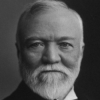
Andrew Carnegie
Andrew Carnegiewas a Scottish-American industrialist who led the enormous expansion of the American steel industry in the late 19th century. He is often identified as one of the richest people in history, alongside John D. Rockefeller and Jakob Fugger. He built a leadership role as a philanthropist for the United States and the British Empire. During the last 18 years of his life, he gave away to charities, foundations, and universities about $350 million– almost 90 percent of his fortune...
NationalityScottish
ProfessionEntrepreneur
Date of Birth25 November 1835
CityDunfermline, Scotland
Those who would administer wisely must, indeed, be wise, for one of the serious obstacles to the improvement of our race is indiscriminate charity.
Those who would administer [charity] wisely must, indeed, be wise, for one of the serious obstacles to the improvement of our race is indiscriminate charity. It were better for mankind that the millions of the rich were thrown into the sea than spent to encourage the slothful, the drunken, the unworthy. Of every thousand dollars spent in so-called charity today, it is probable that nine hundred and fifty dollars is unwisely spent - so spent, indeed, as to produce the very evils which it hopes to mitigate or cure.
I resolved to stop accumulating and begin the infinitely more serious and difficult task of wise distribution.
I wish to have as my epitaph: 'Here lies a man who was wise enough to bring into his service men who knew more than he.'
The wise young man or wage earner of today invests his money in real estate.
Concentrate your energies, your thoughts and your capital. The wise man puts all his eggs in one basket and watches the basket.
Ninety percent of all millionaires become so through owning real estate. More money has been made in real estate than in all industrial investments combined. The wise young man or wage earner of today invests his money in real estate.
Concentrate your energies, your thoughts and your capital.... The wise man puts all his eggs in one basket and watches the basket.
There is very little success where there is very little laughter.
While the law [of competition] may be sometimes hard for the individual, it is best for the race, because it insures the survival of the fittest in every department. We accept and welcome, therefore, as conditions to which we must accommodate ourselves, great inequality of environment, the concentration of business, industrial and commercial, in the hands of a few, and the law of competition between these, as being not only beneficial, but essential for the future progress of the race.
A word, a look, an accent, may affect the destiny not only of individuals, but of nations. He is a bold man who calls anything a trifle.
Why should men leave great fortunes to their children? If this is done from affection, is it not misguided affection? Observation teaches that, generally speaking, it is not well for the children that they should be so burdened.
A man who was generous with his wealth. It has been reported that during his lifetime, Carnegie gave away over $350 million of his money to help others.
The man who dies leaving behind him millions of available wealth, which was his to administer during his life, will pass away unwept, unhonoured and insung no matter to what uses he leaves the dross which he cannot take with him.