Anatole France
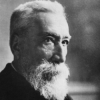
Anatole France
Anatole Francewas a French poet, journalist, and novelist. He was born in Paris, and died in Saint-Cyr-sur-Loire. He was a successful novelist, with several best-sellers. Ironic and skeptical, he was considered in his day the ideal French man of letters. He was a member of the Académie française, and won the 1921 Nobel Prize in Literature "in recognition of his brilliant literary achievements, characterized as they are by a nobility of style, a profound human sympathy, grace, and a true...
NationalityFrench
ProfessionPoet
Date of Birth16 April 1844
CountryFrance
The dog is a religious animal. In his savage state he worships the moon and the lights that float upon the waters. These are his gods to whom he appeals at night with long-drawn howls.
A writer is rarely so well inspired as when he talks about himself.
The Arab who built himself a hut with marbles from the temple of Palmyra is more philosophical than all the curators of the museums of London, Paris, and Munich.
There is a certain impertinence in allowing oneself to be burned for an opinion.
What men call civilization is the condition of present customs; what they call barbarism, the condition of past ones.
It is almost impossible systematically to constitute a natural moral law. Nature has no principles. She furnishes us with no reason to believe that human life is to be respected. Nature, in her indifference, makes no distinction between good and evil.
A good critic is the man who describes his adventures among masterpieces.
The heart errs like the head; its errors are not any the less fatal, and we have more trouble getting free of them because of their sweetness.
God forbids suicide, and is unwilling that his creatures should destroy themselves.
We have drugs to make women speak, but none to keep them silent.
We find it hard to picture to ourselves the state of mind of a man of older days who firmly believed that the Earth was the centre of the Universe, and that all the heavenly bodies revolved around it. He could feel beneath his feet the writhings of the damned amid the flames; very likely he had seen with his own eyes and smelt with his own nostrils the sulphurous fumes of Hell escaping from some fissure in the rocks. Looking upwards, he beheld ... the incorruptible firmament, wherein the stars hung like so many lamps.
The mania of thinking renders one unfit for every activity.
Universal peace will be realized, not because man will become better, but because a new order of things, a new science, new economic necessities, will impose peace.
The wonder is, not that the field of stars is so vast, but that man has measured it.