Ai Weiwei
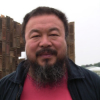
Ai Weiwei
Ai Weiwei; born 28 August 1957 in Beijing) is a Chinese Contemporary artist and activist. His father's side's original surname is 蔣 Jiang. Ai collaborated with Swiss architects Herzog & de Meuron as the artistic consultant on the Beijing National Stadium for the 2008 Olympics. As a political activist, he has been highly and openly critical of the Chinese Government's stance on democracy and human rights. He has investigated government corruption and cover-ups, in particular the Sichuan schools corruption scandal...
NationalityChinese
ProfessionSculptor
Date of Birth18 May 1957
CityBeijing, China
CountryChina
I am everywhere and I am nowhere. That's the beauty of the Internet Age.
The Internet changes the structure of society all the time—this massiveness made of individuals.
The Internet is uncontrollable. And if the Internet is uncontrollable, freedom will win. It's as simple as that.
The Beijing Olympics and the Shanghai World Expo show just how much effort China is willing to spend to enter the global stage. But while China desires to understand the world, it fails to accept its universal values.
People are always wondering if I am an artist or political activist or politician. Maybe I'll just clearly tell you: Whatever I do is not art. Let's say it is just objects or materials, movies or writing, but not art, OK?
Twitter was like a poem. It was rich, real and spontaneous. It really fit my style. In a year and a half, I tweeted 60,000 tweets, over 100,000 words. I spent a minimum eight hours a day on it, sometimes 24 hours.
The internet is a wild land with its own games, languages and gestures through which we are starting to share common feelings.
Police in China can do whatever they want; after 81 days in arbitrary detention you clearly realise that they don't have to obey their own laws. In a society like this there is no negotiation, no discussion, except to tell you that power can crush you any time they want - not only you, your whole family and all people like you.
To protect the right of expression is the central part of an artist's activity... In China many essential rights are lacking, and I wanted to remind people of this.
The Olympic Games are highly commercialised. They purport to follow the traditions of an ancient athletics competition, but today it is the commercial aspect that is most apparent. I have seen how, through sport, cities and corporations compete against each other for financial gain.
The seed is a household object but at the same time it is a revolutionary symbol.
The 'Bird's Nest' National Stadium, which I helped to conceive, is designed to embody the Olympic spirit of 'fair competition.' It tells people that freedom is possible but needs fairness, courage and strength.
So maybe there are three parts in my life - earlier background living in exile in Xinjiang in a very political circumstance, then later the United States from 24 to 36 years old. I was quite equipped with liberal thinking. Then the Internet. If there is no Internet, of course, I cannot really exercise my opinion or my ideas.
I'm always followed by two or three cars and have police around. Even walking in the park, you see them taking photos behind the bushes and trying to videotape everything.