Abbas Kiarostami
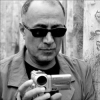
Abbas Kiarostami
Abbas Kiarostami; 22 June 1940 – 4 July 2016) was an Iranian film director, screenwriter, photographer and film producer. An active film-maker from 1970, Kiarostami had been involved in over forty films, including shorts and documentaries. Kiarostami attained critical acclaim for directing the Koker trilogy, Close-Up, Taste of Cherry– which was awarded the Palme d'Or at the Cannes Film Festival that year – and The Wind Will Carry Us. In his later works, Certified Copyand Like Someone in Love, he...
NationalityIranian
ProfessionDirector
Date of Birth22 June 1940
I never intended to write poems, nor to be a photographer, nor to be a film-maker. I just took many, many pictures and I would put them in an album, and then some years later I decided to show them and suddenly I was called a photographer. Same thing with my poetry. They're notes that I'd written in a book and it may be considered poetry.
This concept that you refer to in Buddhism is something I've been nurtured with through the history of my country for 700, 800 years - Persian poets and philosophers haven't said anything different with regard to experiencing life in the moment, as opposed to the belief of permanence.
There were years when Hitchcock was like a master to me, but now I think he's so artificial. I can watch films and say how technically beautiful they are, but I'm not impressed by any technicality.
I have somewhat lost my enthusiasm in the last years. Mainly because film students using digital video these days have not really produced anything which is more than superficial or simplistic; so I have my doubts.
To me, AIDS is an international epidemic and every country can be affected by it. Therefore, it can be discussed on an international level. Unfortunately, AIDS doesn't require a visa.
Digital photography is, by definition, unfinished. You don't feel that after every 24 or 36 shots you have to change your film - you know you can go on for ever if you want. You can see the result immediately, and find out if your original idea is worth going on with or not, whether it can be corrected, whether it can be improved.
I film normal-life subjects in natural settings that some people would consider uncinematic. But what I want to show is nature itself, as the truth of life.
A good movie is made by an initial burst of energy, the way that, when you are in school, your class exercises are always better than your final projects.
I would say that no film is apolitical. There are politics in all films. Any film that is anchored in a society, any film that deals with humanity is necessarily political.
Good cinema is what we can believe, and bad cinema is what we can't believe.
The world is my workshop. It is not my home.
I feel like a tree. A tree doesn't feel a duty to start doing something about the earth from which it comes. A tree just has to bear fruit, and leaves and blossoms. It doesn't feel grateful to the earth.
The calling of art is to extract us from our daily reality, to bring us to a hidden truth that's difficult to access - to a level that's not material but spiritual.
I don't know whether it is fortunate or unfortunate, but I have no such thing as national pride. I don't feel proud that I am Iranian. I happen to be who I am.